
|
|
||||||||||||||||||


| 2026-2027 Electoral Calendar, latest official version |

|
 |
|
|
|
|
|
|
|||||||
|
|
Haiti - Agriculture : How Haitian farmers are building resilience 10/08/2025 09:22:34
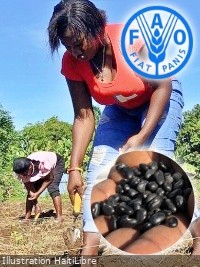
For years, poor-quality seeds have been a concern in Haiti, with ongoing climate shocks and political insecurity adding to the challenges farmers face in their attempts to grow food. Instead of seeds that germinate regularly, farmers end up with plots that only sprout 40 to 50 percent of the time. This not only reduces yields and their profits, but also their ability to support themselves. Approximately two-thirds of the Haitian population depends on agriculture for their livelihoods, most of them smallholder farmers who produce only 40 percent of Haiti's food, creating an unsustainable food situation. "We found that most of the seeds were of questionable quality, meaning they weren't adapted to certain climatic conditions... and as long as they aren't well adapted and of poor quality, production will be low," said Pierre Frantz Jacques, a former farmer and seed bank project manager for the Food and Agriculture Organization of the United Nations (FAO-Haiti). FAO is working with Haiti's Ministry of Agriculture to change this situation by developing the seed economy at the local level and training members of the Artisanal Seed Production Groups (GPAS). Today, there are more than 200 GPAS across Haiti, cultivating high-quality seeds for distribution to other farmers to increase their yields and reduce their dependence on foreign seed and food imports. GPAS farmers choose the seed varieties they wish to grow, many opting for local species that are already well adapted to the environment and rooted in local agricultural traditions. "Farmers and local populations know their environment, all its specificities. They know the soil type, the climate. And this knowledge is passed down from generation to generation," said Mr. Jacques. In addition, the FAO is working to provide seed banks with silos and other tools for proper storage. This is particularly important during climate shocks, allowing farmers to better protect their stocks despite extreme weather events. HL/ HaitiLibre
|
|









|
|
Why HaitiLibre ? |
Contact us |
Français
Copyright © 2010 - 2026 Haitilibre.com |