
|
|
||||||||||||||||||


| 2026-2027 Electoral Calendar, latest official version |

|
 |
|
|
|
|
|
|
|||||||
|
|
Haiti - Agriculture : Low rainfall hamper summer seeding operations 03/09/2018 08:48:13
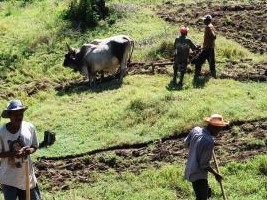
In its last newsletter the network Famine Early Warning Systems Network FEWSNET notes that delays and low rainfall hamper summer seeding operations in Haiti, which have started well in the humid mountains, however. At the same time, spring harvests peaked in July in areas where the season did not fail and sowed in March. Lower than normal production is expected due to drought. On the other hand, banana, root and tuber crops and fruit crops are normal. Some households are adopting new coping strategies such as the consumption of non-preferred products and seem uncertain about reopening of classes. On the other hand, non-agricultural sources of income (notably the sale of charcoal and labor in the Dominican Republic) remain at a normal level. In July, the price of local maize showed relative stability compared to June, while that of black pea fell (more than 7%). On the other hand, the price of imported rice continues to rise and to be above the average of the last 5 years. The whole of Haiti will therefore remain in Stress (Phase 2 of the CPI performance indicator) and in the Minimal phase (Phase 1 of the IPC). Some households in the Upper Plateau, the North and the North East could be in crisis (IPC phase 3), given the impact of the drought on their livelihoods, but there is no indication that there are enough of them to change the classification of the zones. Learn more about the Integrated Food Security Phase Classification (IPC) : Phase 1 : Usually adequate and stable food access with moderate to low risk of sliding into Phase 3, 4, or 5. Phase 2 : Moderately / Borderline Food Insecure Borderline adequate food access with recurrent high risk (due to probable hazard events and high vulnerability) of sliding into Phase 3, 4, or 5. Phase 3 : Acute Food and Livelihood Crisis Highly stressed and critical lack of food access with high and above usual malnutrition and accelerated depletion of livelihood assets that, if continued, will slide the population into Phase 4 or 5 and / or likely result in chronic poverty. Phase 4 : Humanitarian Emergency Severe lack of food access with excess mortality, very high and increasing malnutrition, and irreversible livelihood asset stripping. Phase 5 : Famine / Humanitarian Catastrophe Extreme social upheaval with complete lack of food access and / or other basic needs where mass starvation, death, and displacement are evident. See also : HL/ HaitiLibre
|
|









|
|
Why HaitiLibre ? |
Contact us |
Français
Copyright © 2010 - 2026 Haitilibre.com |